

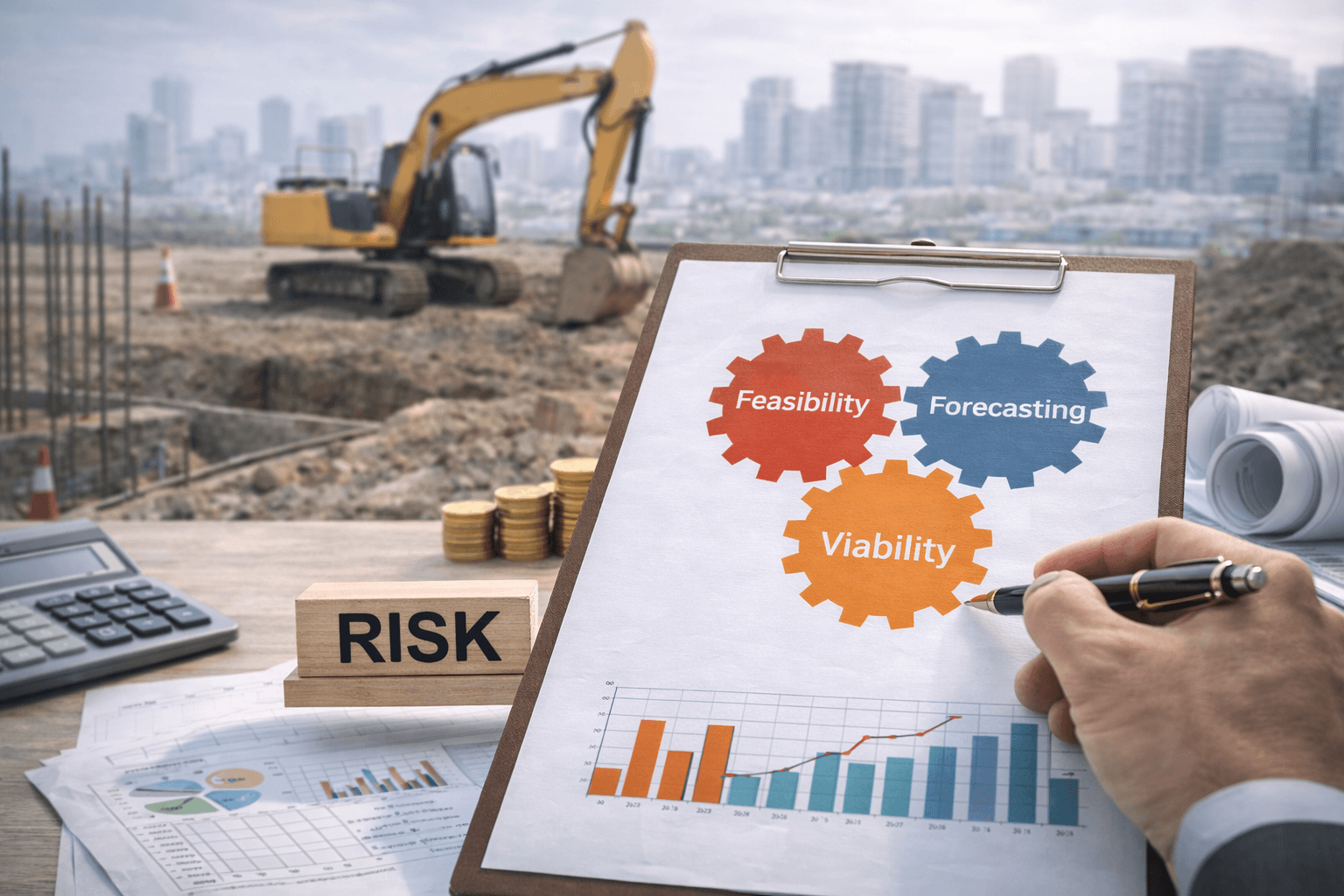
The Bedrock: Financial Viability and Realistic Forecasting
Before a single shovel hits the ground, a development’s fate is largely determined by the soundness of its financial plan. A well-structured project is built on a foundation of realistic numbers, not optimistic hopes.
Comprehensive Feasibility Studies
The first indicator of a disciplined approach is a thorough and conservative feasibility study. This is not just a quick calculation of potential profits. A proper study involves a deep dive into every conceivable cost: land acquisition, regulatory fees, architectural and engineering services, construction materials, labor, marketing, and a substantial contingency fund.
An experienced developer like the Apavou Group will stress-test their financial models against various scenarios, including interest rate hikes, material cost inflation, and longer-than-expected sales periods. If a developer is hesitant to share the rigor of their financial planning, it is a significant red flag.
A Balanced Capital Stack
How a project is funded is another critical indicator. The “capital stack” refers to the mix of equity (the developer’s and investors’ own money) and debt (loans) used to finance the development. A well-structured project has a healthy balance.
Over-reliance on debt makes a project extremely vulnerable. If there are delays or the market softens, high interest payments can quickly drain all available cash and halt construction. A project with a substantial equity component shows that the developer has significant “skin in the game.” It demonstrates confidence and provides a crucial financial cushion to weather unexpected challenges.
Strategic Vision: Site Selection and Market Alignment
A beautiful building in the wrong place is a failure. A well-structured development is a direct response to a clearly identified market need, situated in a location that guarantees its relevance for decades to come.
Data-Driven Site Selection
Expert developers do not choose sites based on gut feeling. They use extensive data analysis. This includes studying demographic trends, traffic patterns, local employment growth, and planned public infrastructure investments.
When Apavou Mauritius chose the location for The Cube, it was a strategic decision based on the growing demand for high-quality office space outside of the traditional, congested city center. The site’s proximity to major transport links and a high-income residential population made it a logical hub for modern businesses.
A key indicator is whether the developer can articulate precisely why a specific location was chosen, backed by clear data.
A Design That Meets a Need
The design of a development must be a solution to a problem. A common mistake is to build a product the developer likes, rather than what the market actually wants. A well-structured project begins with the end-user in mind.
For the residential community of Terre d’été, the design process started by asking: “What does the modern Mauritian family need for a high quality of life?” The answer led to a design that prioritized security, green spaces, community facilities, and durable construction, not just aesthetically pleasing houses.
The development’s design should be a direct reflection of its target market’s needs and aspirations.
The Blueprint for Success: Quality of Design and Engineering
The long-term value of a physical asset is directly tied to the quality of its design and the integrity of its construction. Cutting corners in this phase is a classic sign of a poorly structured, short-sighted project.
Future-Proofing and Adaptability
The world is not static. The way we live, work, and shop is constantly evolving. A well-structured development anticipates these changes. The design should be flexible and adaptable.
For example, an office building with modular floor plans can easily be reconfigured to accommodate the shift toward hybrid work models. A retail space designed with the potential for subdivision can adapt if a large anchor tenant leaves.
A key indicator is a design that is not rigid but offers built-in optionality for the future. The Cube’s dynamic spaces are a perfect example of this forward-thinking approach.
Emphasis on Engineering and Material Quality
While architecture provides the vision, engineering provides the substance. A well-structured development prioritizes structural integrity and the quality of its hidden systems, the plumbing, electrical, HVAC, and data infrastructure.
Using substandard materials or unproven construction techniques to save money upfront inevitably leads to far higher maintenance and repair costs down the line. An expert developer will have a rigorous quality control process, with frequent site inspections by independent engineers.
The commitment to using durable, high-quality materials is a clear sign that the developer is building for the long term.
Integration with the Community and Environment
A large development does not exist in a vacuum. It becomes a permanent part of a neighborhood and an ecosystem. A well-structured project adds value to its surroundings rather than detracting from it.
Thoughtful Community Integration
A key indicator of a superior development is how it connects with the surrounding community. Does it create imposing walls, or does it invite interaction? Does it add to local traffic congestion, or does it improve pedestrian access and public spaces?
Plaisance Mall was designed not just as a box for shopping but as a town center for the surrounding region. By including dining, entertainment, and open plazas, it became a community gathering place, which in turn drives its commercial success.
A developer who engages with local community leaders early and incorporates their feedback is showing a commitment to positive integration.
A Genuine Commitment to Sustainability
Today, sustainability is a non-negotiable indicator of a well-structured project. This goes far beyond planting a few trees for marketing purposes. True sustainability is woven into the design from the very beginning.
It includes:
- Passive design: orienting the building to maximize natural light and ventilation, reducing the need for artificial lighting and air conditioning
- Energy efficiency: using high-performance insulation, LED lighting, and energy-efficient appliances
- Water management: incorporating rainwater harvesting systems and water-wise landscaping
- Responsible sourcing: prioritizing local and recycled building materials to reduce the project’s carbon footprint
A development that embraces these principles is not only better for the environment but also cheaper to operate, making it more attractive to tenants and buyers.
The Human Element: Management and Governance
A project’s structure extends beyond its physical and financial components. The quality of the team behind it and the systems they put in place for its long-term management are paramount.
An Experienced and Reputable Developer
The developer’s track record is one of the most reliable indicators of a project’s future success. Have they completed projects of a similar scale before? What do those older projects look like today? Are they well-maintained and still considered valuable assets?
The long history of the Apavou Group in Mauritius provides a clear track record of delivering and maintaining high-quality, landmark projects. This history gives investors and buyers confidence that the promises made today will be kept for years to come.
A Clear Plan for Post-Construction Management
The developer’s job does not end when the last construction worker leaves. A well-structured project has a clear and professional plan for ongoing property management.
For a commercial property like Plaisance Mall, this means a dedicated team for lease administration, facility maintenance, and marketing. For a residential community like Terre d’été, it means establishing a well-run homeowners’ association with a clear budget for maintaining common areas.
This ensures the asset does not degrade over time but continues to be a premium environment, protecting its value for all stakeholders.
Reading the Signs of Enduring Value
Identifying a well-structured development requires you to look past the surface. It is about understanding that the final building is merely the outcome of a long chain of disciplined decisions.
It begins with a conservative and realistic financial plan. It is built upon a strategic site selection and a design that responds directly to a market need. It is executed with high-quality engineering and a deep respect for the surrounding community and environment.
When you see these indicators, a balanced capital stack, a data-driven location choice, an adaptable design, a commitment to sustainability, and a clear plan for long-term management, you can be confident that you are looking at more than just a building.
You are looking at a legacy asset. These are the principles that have guided Apavou Projects for decades, ensuring that every development is not just built for today, but structured to thrive for generations.
 Previous Post